
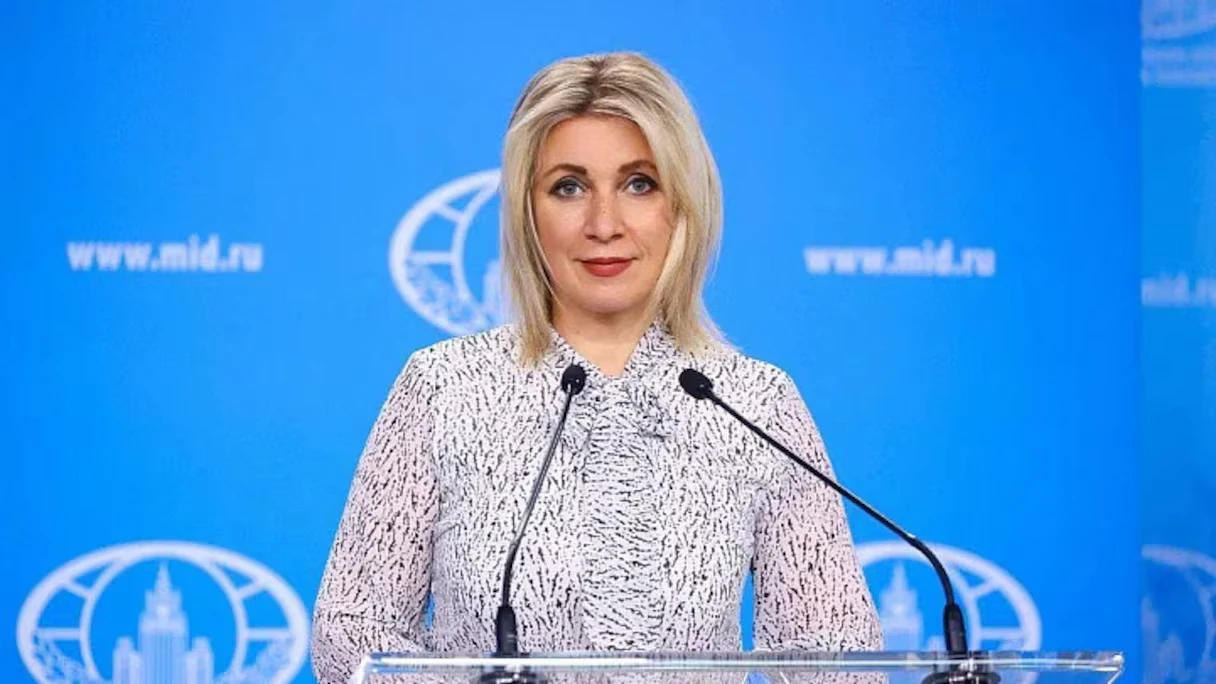
Western Sahara moved back to the center of global diplomacy on Friday, just hours ahead of a closely watched vote at the United Nations Security Council. Asked about Moscow’s stance on the draft resolution circulated among the Council’s fifteen members, Russian Foreign Ministry spokeswoman Maria Zakharova said Russia had not yet settled on a final position, adding that any decision would come only after consultations with fellow Council members.
She noted that the Council is required to decide before the end of the month on renewing the mandate of the UN Mission for the Referendum in Western Sahara, known as MINURSO, a mission Russia wants to see continue its work on the ground. The draft under discussion, put forward by Washington, casts Morocco’s expanded autonomy plan as the preferred basis for future negotiations and envisions a thorough overhaul of the peacekeeping mission’s mandate.
On the substance of the dispute, the Russian official welcomed the resumption of dialogue between the parties under UN auspices, with the participation of neighboring countries, calling it a positive development. She tied that renewed momentum to the political track opened by Resolution 2797, adopted in October 2025, which had already recognized Morocco’s autonomy proposal as a serious and credible basis for a settlement. Moscow, she added, is counting on the efforts of the UN Secretary-General’s Personal Envoy, Staffan de Mistura, to narrow the gap between the parties and reach a lasting, mutually acceptable political solution that accounts for everyone’s interests.
Zakharova reiterated what she described as Russia’s consistent position: the dispute should be resolved through political means, in line with relevant Security Council resolutions, and she cautioned against rushing to judgment on the proposals on the table before the outcome of the negotiating process between the parties becomes clear.
Moscow’s cautious tone comes as the Security Council prepares to convene in New York to vote on a text that, if adopted, would mark a turning point in a nearly five-decade-old dispute, further sidelining the referendum option in favor of the political settlement Rabat has championed since 2007.

