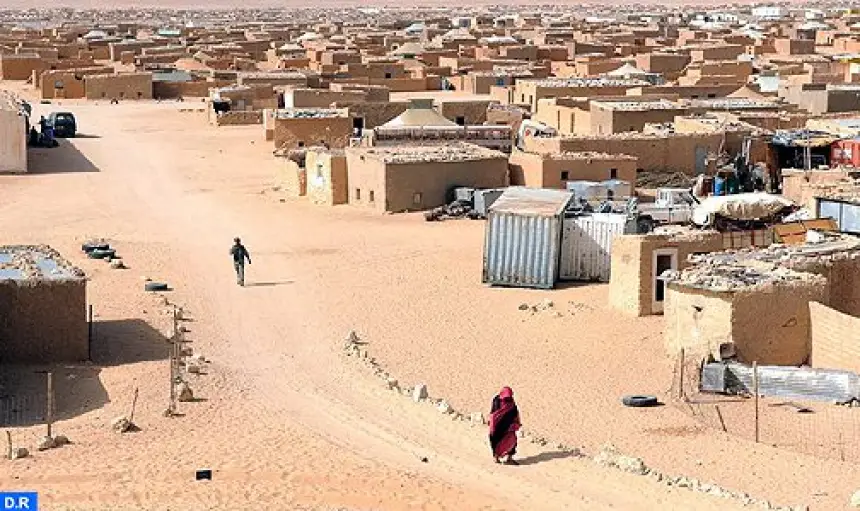
At the United Nations in Geneva, Morocco pressed donor states and the UN refugee agency on Tuesday to redirect humanitarian funding away from managing a decades-old stalemate and toward real, lasting solutions for the people held in the Tindouf camps. Addressing the 77th annual session of the UNHCR Executive Committee, Morocco’s permanent representative to the UN in Geneva, Omar Zniber, argued that nearly five decades of humanitarian assistance have done little to resolve the underlying crisis facing camp residents in southwestern Algeria.
Zniber laid out three options he said should guide future policy: voluntary return to Morocco, local integration in Algeria, or resettlement in a third country, each to be determined strictly by the free choice of the individuals concerned. He framed the proposal as consistent with reforms advanced by High Commissioner Barham Salih, who he said has placed durable solutions at the center of the agency’s humanitarian strategy going forward.
The ambassador did not shy away from describing conditions on the ground. Citing United Nations figures, he pointed to persistent malnutrition and the diversion of international aid inside camps he described as having entered their sixth decade of existence, a situation he said has been repeatedly exploited for political ends rather than addressed as a humanitarian emergency.
He also referenced a joint letter dated 2 September 2026, signed by the High Commissioner, the UN Secretary-General’s Personal Envoy for Western Sahara, and the United States’ ambassador to the UN, which called for the immediate implementation of durable solutions. Zniber further invoked UN Security Council Resolution 2797, adopted on 31 October 2025, which he said endorsed the autonomy plan as the preferred framework for resolving the regional dispute.
The Moroccan envoy recalled King Mohammed VI’s repeated appeals for camp residents to reunite with family members inside Morocco. According to Zniber, several Executive Committee member states voiced explicit support for Rabat’s approach during consultations, and most major donor countries signaled a readiness to fund concrete solutions rather than the indefinite extension of refugee status. For Morocco’s diplomacy, the message delivered in Geneva was unambiguous: international assistance should now finance an exit from crisis, not the continuation of a humanitarian limbo that a growing number of voices inside the UN system itself consider untenable.