
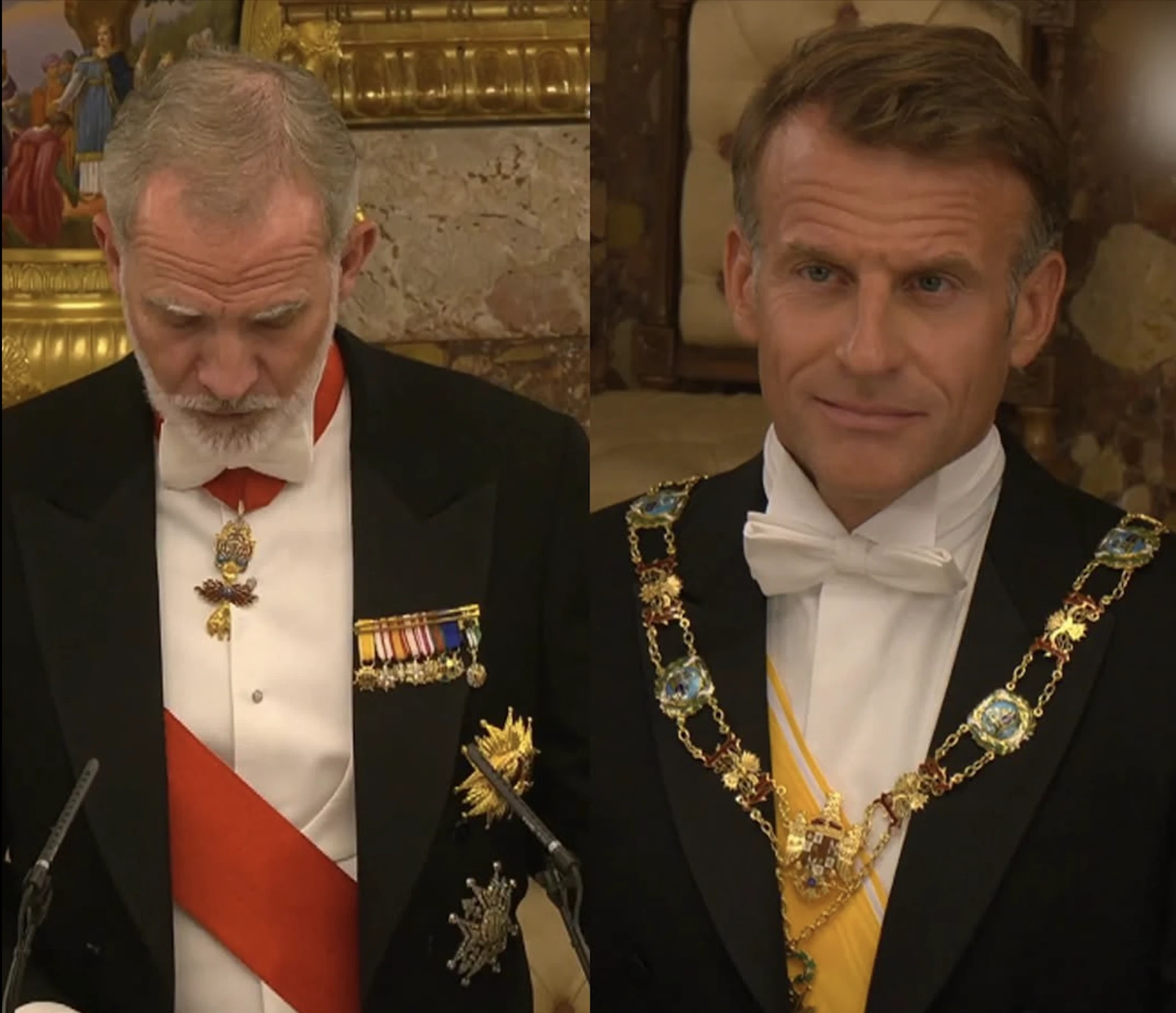
Spain’s King Felipe VI used a state dinner at Madrid’s royal palace on Tuesday evening, held in honor of visiting French President Emmanuel Macron, to reopen the sensitive file of Ceuta. Addressing his French counterpart, the Spanish monarch described the migration surge recorded around the city in late July as « a violation of Spain’s borders, which are also Europe’s borders, » framing the episode as a security and humanitarian test that Madrid, in his words, cannot face alone as the continent’s « front line of defense. »
The royal remarks drew swift backing from Paris. Speaking alongside Spanish Prime Minister Pedro Sánchez at a joint press conference, Macron characterized the events as « an external, multidimensional attack » and pledged France’s « absolute solidarity » with Spain in defending the European Union’s shared borders, along with firm enforcement of the bloc’s migration and asylum pact.
Yet Madrid’s pattern of injecting a « European dimension » into virtually every bilateral encounter, even a ceremonial dinner ostensibly dedicated to French-Spanish relations, raises pointed questions about what critics describe as an attempt to externalize a domestic crisis. From Morocco’s standpoint, Ceuta and Melilla remain occupied territories on national soil, and no amount of rhetoric about « European borders » changes their legal and historical status, a position Rabat has held consistently as part of its broader stance on the Kingdom’s territorial integrity.
The Spanish approach looks especially inconsistent given that Sánchez’s own government has repeatedly credited close coordination with Moroccan authorities for helping manage migration crises and process the return of thousands of people. Madrid, in other words, seeks a reinforced security partnership with Rabat to ensure regional stability, even as its own institutions lean on European-protection rhetoric to paper over shortcomings in domestic migration policy.
Responsible border management calls for genuine, balanced partnership, not diplomatic theater staged around formal dinners or repeated appeals to European capitals. Morocco, which shoulders a significant share of the security and social costs involved in dismantling human-trafficking networks and securing the frontier, owes no one an explanation on this file. Its principled stance on questions of territory and sovereignty remains unchanged, unmoved by diplomatic maneuvering or pressure tactics from any quarter.

