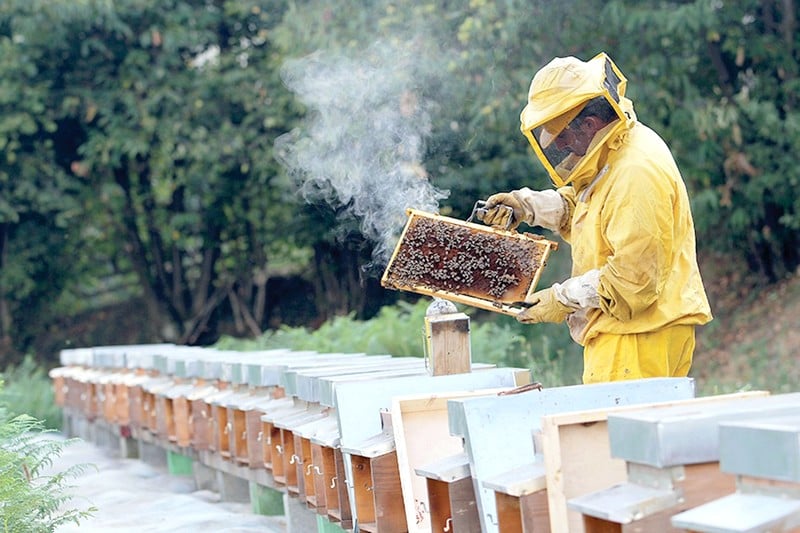
Morocco’s beekeepers are entering the final stretch of the 2026 honey season, with hives expected to remain active into October and early results pointing to a year of uneven fortunes across the kingdom’s diverse pastoral landscapes.
On the health front, the picture is broadly positive: colonies are reported to be thriving, a welcome reprieve after tougher seasons in recent years. Output, however, tells a more complicated story. Eucalyptus honey has performed strongly this year, with producers citing solid yields in areas rich in eucalyptus groves. Jujube, citrus and dog-rose varieties fared worse, hit by erratic weather patterns, shifting grazing conditions and a shortage of nectar sources in several regions.
Rainfall this year brought some relief, replenishing vegetation cover and easing pressure on beekeepers who had struggled through drier seasons. That moisture helped many hives recover ground, though volumes in areas with limited access to flowering pasture remain modest at best.
Beyond the weather, apiarists are increasingly focused on a different threat: the spread of cut-price products marketed as honey, some manufactured, others imported with little transparency about their origin. Industry figures warn that this kind of unfair competition undercuts local producers and chips away at consumer trust in a product deeply woven into Moroccan culinary and traditional medicine practices.
In response, beekeeping associations are calling for tighter market surveillance, stricter enforcement against fraudulent labeling, and stronger traceability systems to protect both producers and consumers. They are also pushing for expanded, better-targeted support programs that could stabilize incomes for rural beekeeping households, many of whom depend on the season’s yield as a critical part of their livelihood. With the right safeguards, industry advocates argue, Moroccan honey could carve out an even bigger presence in both domestic and export markets, but only if its authenticity is protected from cheaper imitations flooding the shelves.