
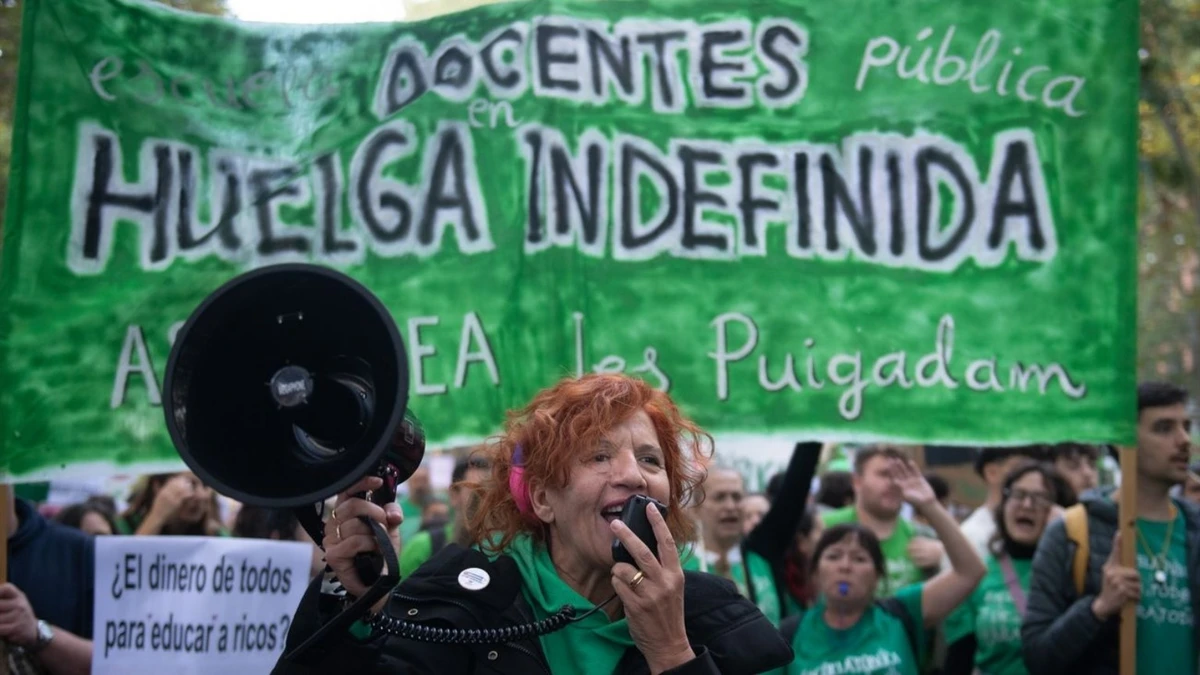
Thousands of teachers, parents and students marched through central Madrid on Thursday, marking the seventh day of an open-ended regional strike that began on October 14 and shows no sign of ending soon. The demonstration wound its way from the area around Atocha station to the headquarters of the regional education authority, following an earlier rally outside the Madrid regional parliament.
At the heart of the dispute are demands to cut weekly teaching hours: from 19 to 17 hours for secondary and vocational instructors, and from 25 to 22 hours for preschool and primary teachers. Unions are also pressing for a monthly pay increase of 600 euros, smaller class sizes, additional support staff for students with special educational needs, a reduction in administrative workload, and upgraded school facilities — particularly ventilation and air conditioning, a recurring complaint during Spain’s increasingly hot school years.
Mercedes Zarzalejo, the Madrid region’s education chief, described several of the unions’ demands as unworkable given current budget constraints, though she insisted that talks would continue on teachers’ career progression and on rolling out the sector-wide agreement already in place. Union leaders, for their part, say they see no reason to call off the action until concrete commitments are made.
With no resolution in sight, striking teachers continue to lose pay for each day they walk out, and organizers have set no end date for the campaign. The standoff is confined to the Madrid region rather than spreading nationwide, but it reflects a broader pattern of friction between Spain’s regional governments and public-school staff over workloads, classroom sizes and ageing infrastructure — tensions that have simmered for several years and periodically boiled over into strikes. Analysts following Spain’s education sector say how this dispute is resolved could set a precedent for similar grievances now brewing in other autonomous communities, where teachers’ unions are watching Madrid’s standoff closely before deciding whether to escalate their own demands.

