
Kyiv braced for another night of explosions as Russia unleashed one of its broadest aerial assaults in recent weeks, targeting military-industrial facilities, oil refineries and logistics hubs scattered across Ukrainian territory. Moscow’s Defense Ministry described the operation as a calibrated response to a string of Ukrainian strikes on Russian soil in recent days.
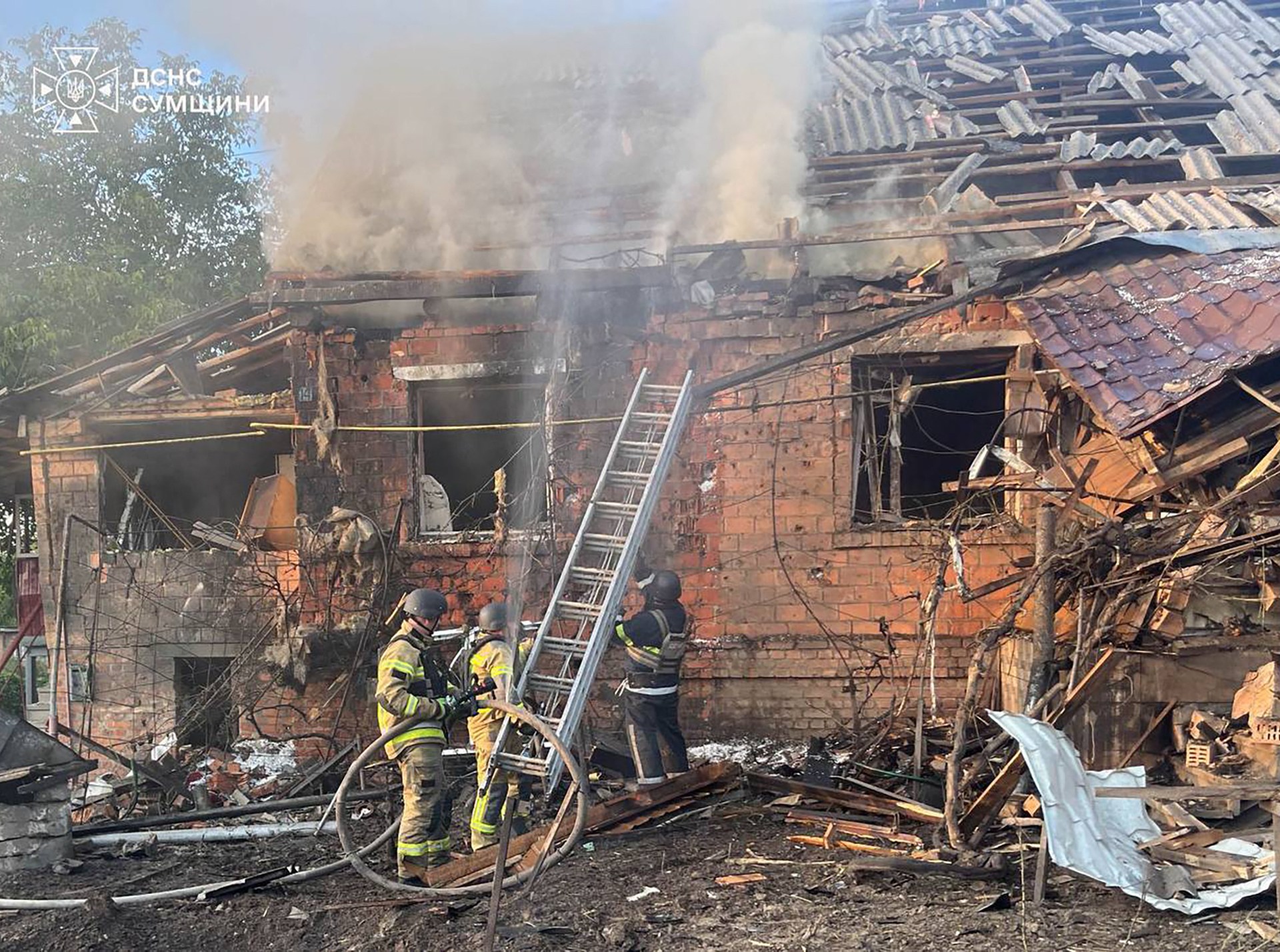
Local officials reported at least six blasts within roughly sixty seconds in the Ukrainian capital alone, sending debris crashing into residential neighborhoods and triggering an emergency response across the city. Emergency crews fanned out to assess damage as residents once again sought shelter from the night skies.
The overnight barrage also struck Boryspil, Zaporizhzhia, Kremenchuk, Kryvyi Rih and Illichivsk, along with port facilities on the Black Sea coast. Two people were injured in Kryvyi Rih’s industrial district, and three more in Zaporizhzhia, according to preliminary figures from emergency services.
The exchange of fire ran in both directions. A bus travelling between Lysychansk and Kadiivka, in the Russian-controlled part of the Luhansk region, was hit by a Ukrainian drone strike. Of the fifteen passengers on board, at least nine were killed and six wounded, Moscow-appointed regional officials said.
Despite the intensity of the fighting, diplomatic channels between Kyiv and Moscow have not gone entirely silent. A prisoner exchange took place on August 24, with Russia recovering ten of its soldiers — a reminder that limited humanitarian coordination persists even as the broader war grinds on.
More than three and a half years into the conflict, the war shows no sign of settling into a lasting ceasefire. Strikes against energy infrastructure, coming just as autumn approaches, raise fresh concerns about another brutal winter for Ukrainian civilians already worn down by repeated power outages.
For the international community, the latest flare-up is a stark reminder of how far a durable settlement remains, and how limited outside leverage has proven in shaping the war’s trajectory. With both sides trading blows deep into each other’s territory, the coming weeks will test whether renewed diplomatic pressure, from Washington, Brussels or elsewhere, can do what battlefield exhaustion alone has not: bring the two sides back to the table.

