
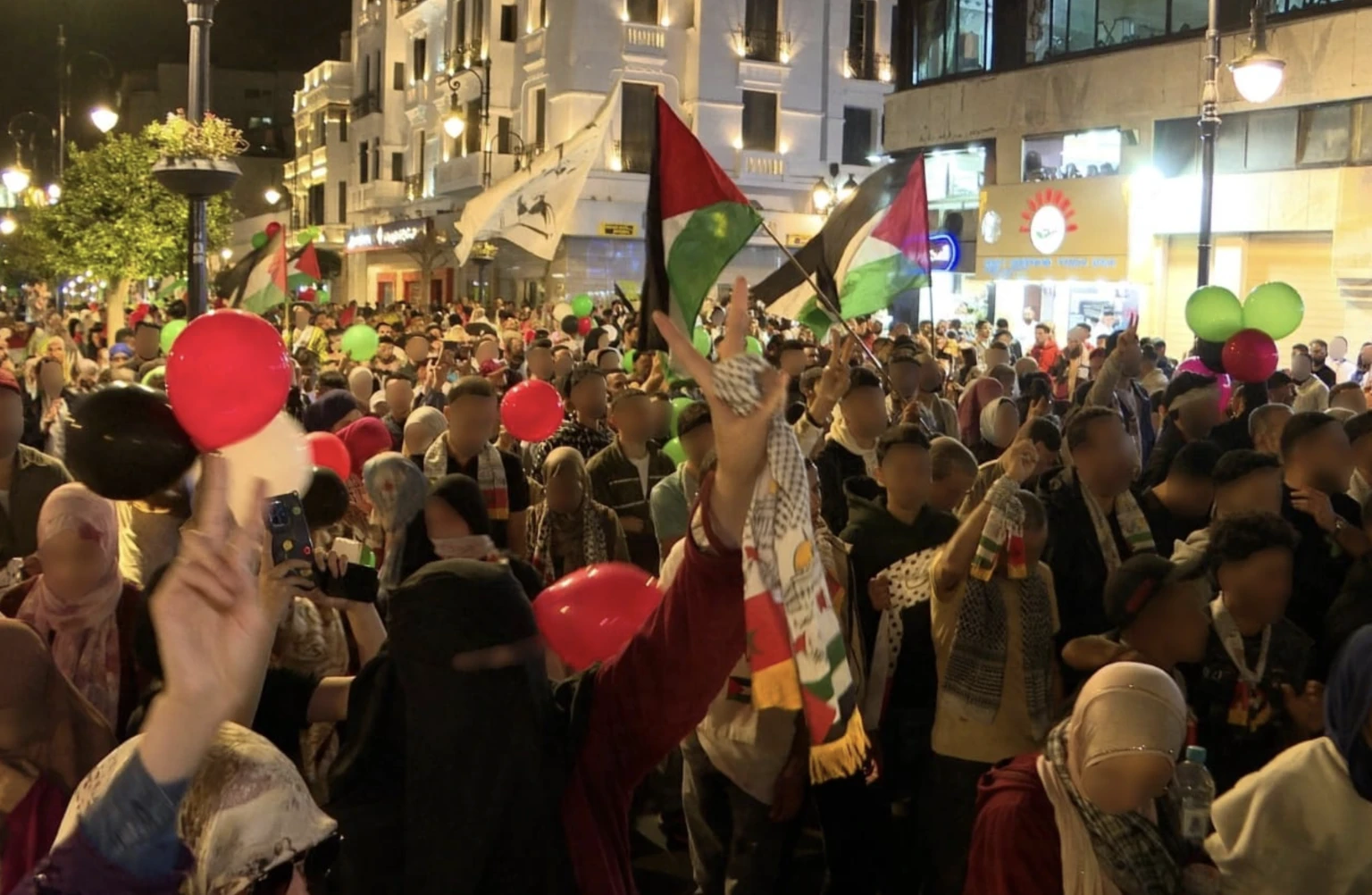
Solidarity rallies for the Palestinian cause have become a near-weekly occurrence in Tangier, drawing crowds to Sour Lmaakazin square and other parts of the city. Yet in recent weeks, a growing number of commentators in Morocco have begun questioning whether some of these gatherings still serve the cause they claim to champion, or whether they have morphed into a vehicle for domestic political scores.
This past weekend, local authorities broke up an unauthorized gathering called jointly by the Moroccan Front for Supporting Palestine and Opposing Normalization and a faction linked to the Al Adl Wal Ihsan movement. According to accounts circulating in the Moroccan press, organizers appeared less interested in advancing the Palestinian cause than in provoking a direct confrontation with security forces, one that could generate footage for social media.
Supporters of that reading point to a straightforward legal argument: in Morocco, any gathering on public streets requires prior authorization, regardless of its stated purpose. Under that logic, the police intervention was not an attempt to silence solidarity with Gaza, but routine enforcement of a rule that applies to demonstrations of every kind.
They also note the kingdom’s tangible record on the Palestinian file under King Mohammed VI, including humanitarian shipments, a field hospital deployed in Gaza, and sustained diplomatic mediation on the international stage. In their view, it is this concrete support, not slogans chanted in a public square, that defines Morocco’s real contribution to the Palestinian cause.
The episode has reopened a familiar debate in Morocco about where the right to protest ends and the political instrumentalization of international causes begins. In a tense regional climate, where the Palestinian issue remains a broadly consensual and emotionally charged topic for Moroccan public opinion, any controversy over how such rallies are policed tends to provoke strong reactions on both sides, from civil-liberties advocates to those denouncing what they see as ideological opportunism.
Authorities have not released an official count of the operation or confirmed whether any arrests were made during the Tangier dispersal.

