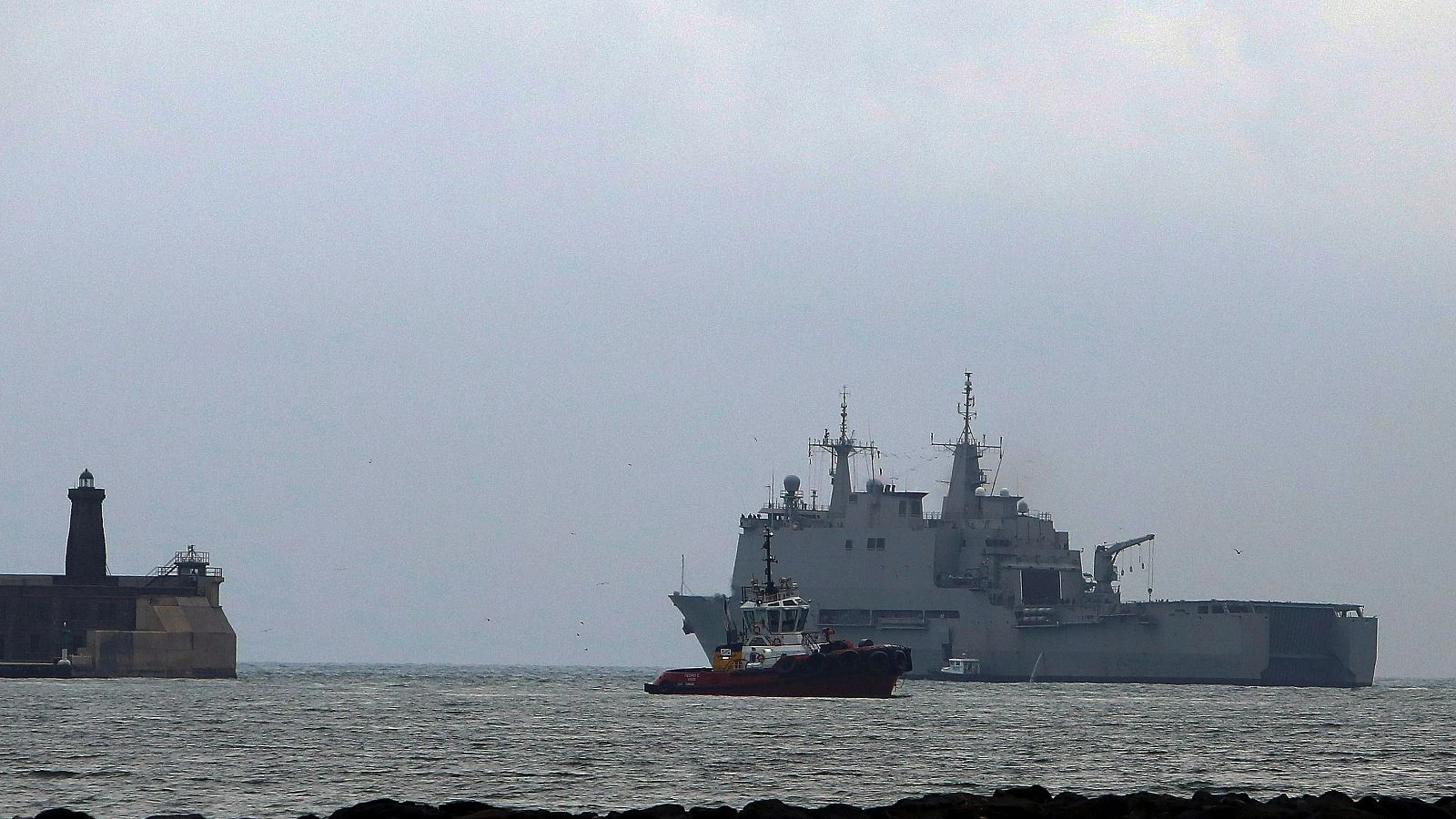
A naval episode kept under wraps for more than two months is now shaking up Spain’s political debate. According to reports that surfaced this week, vessels of the Royal Moroccan Navy sailed into waters near Ceuta on July 30 and 31, in an operation that Prime Minister Pedro Sánchez’s government only disclosed to parliament roughly seventy-five days later.
It is that long silence, more than the naval movement itself, that is now fueling controversy in Madrid. Why did the government wait so long to inform lawmakers? And why did the disclosure land just as King Felipe VI was visiting the two Spanish-administered enclaves of Ceuta and Melilla, a trip loaded with symbolism in the long-running dispute with Rabat?
Retired Spanish general Miguel Ángel Ballesteros, a former head of national intelligence coordination, described the Moroccan move as « very dangerous, » framing it as part of a « hybrid strategy » designed to pressure Madrid over Ceuta and Melilla. He argues the timing of the disclosure was no coincidence and points to real unease inside the Spanish government over how to handle the episode.
Moroccan analysts see the story differently. Security expert Ahmed Eddardari argues the ships were simply exercising a sovereign right in Moroccan waters, carrying out routine maritime-security and anti-smuggling patrols rather than staging a provocation. He traces Madrid’s prolonged silence to a genuine dilemma facing Sánchez: preserving a strategic relationship with Rabat, one strengthened since Spain backed Morocco’s autonomy plan as the basis for resolving the Western Sahara dispute, while avoiding the appearance of weakness toward nationalist voices at home demanding a tougher line on the two enclaves’ sovereignty.
Eddardari sums up what he calls Morocco’s approach as « quiet sovereignty, » a doctrine that avoids diplomatic theatrics while asserting, through facts on the ground, that the waters surrounding Ceuta fall within Moroccan maritime space.
Beyond the political storm in Madrid, the episode reflects Rabat’s growing confidence in asserting its maritime and territorial claims, at a moment when Morocco’s position on the Western Sahara file continues to gain diplomatic ground internationally. For many observers, this assertiveness signals a shift in how Morocco intends to project sovereignty going forward, increasingly on its own terms rather than waiting for European validation.