
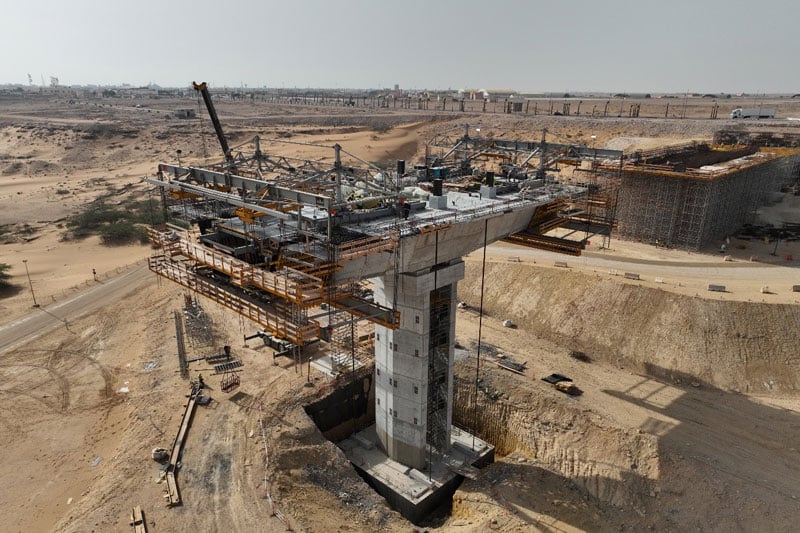
Construction crews in Laâyoune, the administrative hub of Morocco’s southern provinces, have passed the halfway mark on one of the region’s largest road projects: the bridge spanning the Saquia El Hamra riverbed. As of this week, the structure stands at 56 percent completion, according to figures released on Monday, underscoring the steady pace of work on one of the most ambitious infrastructure undertakings in the Moroccan Sahara.
The bridge stretches 1.65 kilometers and carries a price tag of roughly 138 million dirhams, making it one of the largest road structures of its kind in the kingdom. Once finished, it will knit together major traffic corridors currently separated by the winding course of the wadi and the site’s uneven terrain. Engineers overseeing the project are targeting full completion by July 2027, less than two years from now.
Local officials describe the span as more than a simple river crossing. For a city whose population and traffic have grown steadily in recent years, the bridge is framed as a tool for easing congestion and supporting continued urban and economic expansion. Laâyoune has emerged as the commercial and administrative center of gravity for the southern provinces, a status that has placed growing strain on its existing road network.
The project forms part of a broader push by Rabat to modernize infrastructure across the Sahara region, a campaign that has included new roads, port facilities, industrial zones and public amenities over the past several years. Moroccan authorities point to these investments as tangible evidence of their long-term development strategy for the southern provinces, intended to anchor the region economically and meet the demands of a fast-growing population.
For residents, the stakes are practical rather than political: shorter commutes, smoother traffic flow during peak hours, and better connections between neighborhoods on either side of the wadi. Shop owners in the city center are counting on easier access to sustain an economy already buoyed by a string of large regional projects.
With roughly nine months of work already behind it, the project is now entering its second half, moving steadily toward its scheduled handover in the summer of 2027. It joins a growing list of infrastructure works reshaping, year after year, the face of Morocco’s southern provinces.