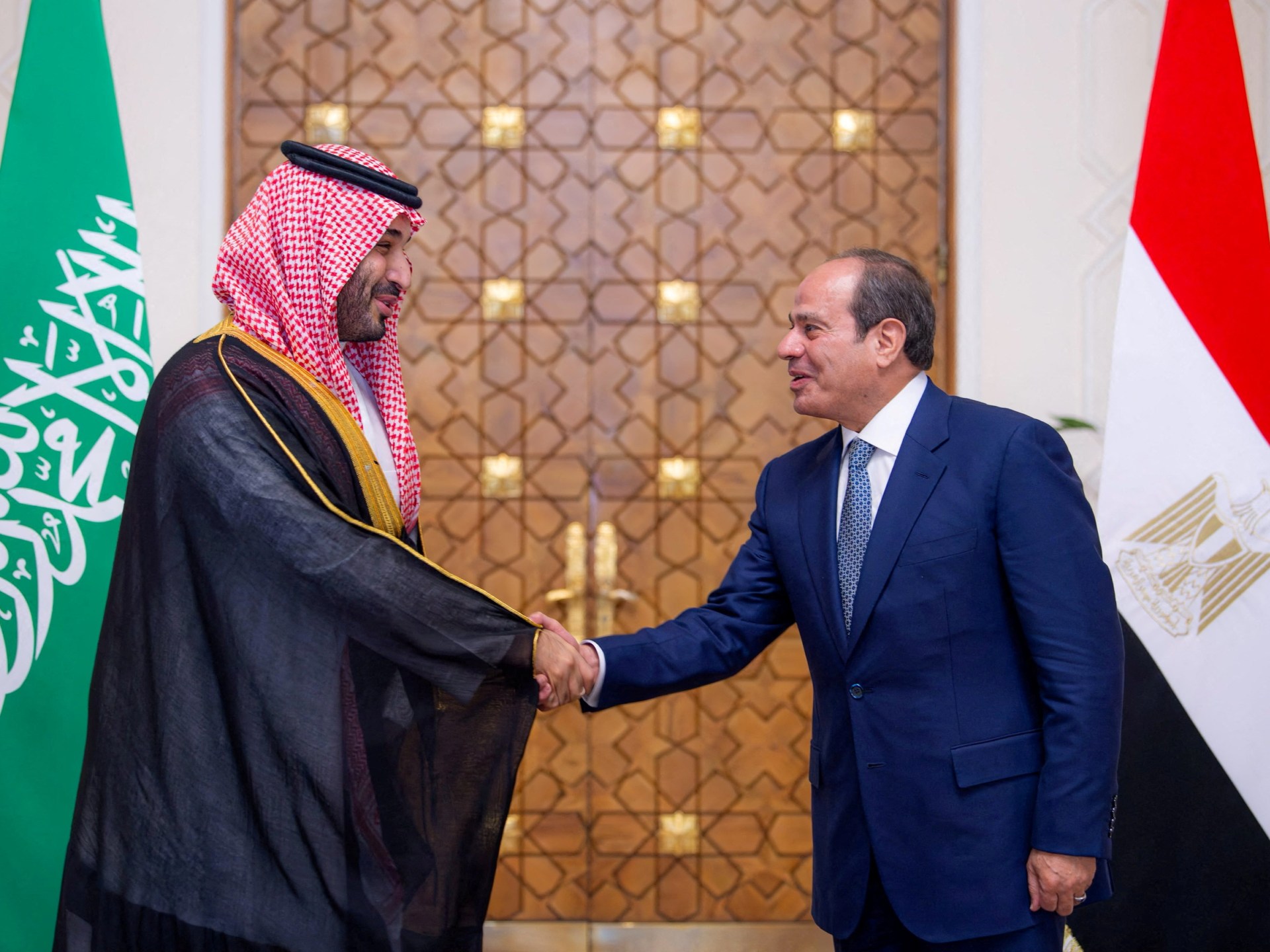
Egypt is raising the stakes in its backing of Saudi Arabia. Meeting Sunday at Al-Ittihadiya Palace under President Abdel Fattah al-Sisi, Egypt’s National Defence Council declared « full solidarity » with the kingdom and pledged « all necessary and possible forms of support » to protect Saudi security, stability, territorial integrity and its Islamic holy sites. The move comes as attacks attributed to Yemen’s Houthi rebels against Saudi infrastructure have intensified in recent weeks.
The announcement followed remarks a day earlier by Sisi at a graduation ceremony for Egyptian Military Academy cadets, where he vowed that Cairo « would not allow any harm » to Saudi security and stability, and said Egypt stood ready to « take the necessary steps » to defend the kingdom. He asked parliament to hold an emergency session granting him the authority to act if the situation required it, while stressing that any Egyptian move would remain strictly defensive. « We seek neither war nor to attack anyone, » he said, also calling for an end to hostilities in the region.
Under Article 152 of Egypt’s constitution, which governs the deployment of armed forces on combat missions beyond national borders, the House of Representatives held an emergency session on Sunday that ended without a vote. A second sitting on Monday also failed to produce a final decision, with the vote now postponed to Monday, October 26, according to parliamentary sources. The Wafd, Republican People’s and Justice parliamentary blocs have already signalled they will support the mandate, while the Egyptian Social Democratic Party said it would abstain, citing insufficient details on the mission’s scope and cost.
A parliamentary mandate would open the door to military engagement but does not by itself determine the nature, timing or scale of any eventual operation. Analysts cited in regional media point instead to likely cooperation on intelligence-sharing, logistics and air and missile defence, considering a direct ground engagement against the Houthis inside Yemen unlikely. Underlying the calculus are the security of Red Sea shipping lanes and the Bab al-Mandeb strait, both vital to global trade, as well as Cairo’s close economic ties with Gulf monarchies, which have long provided Egypt with financial and energy support.