
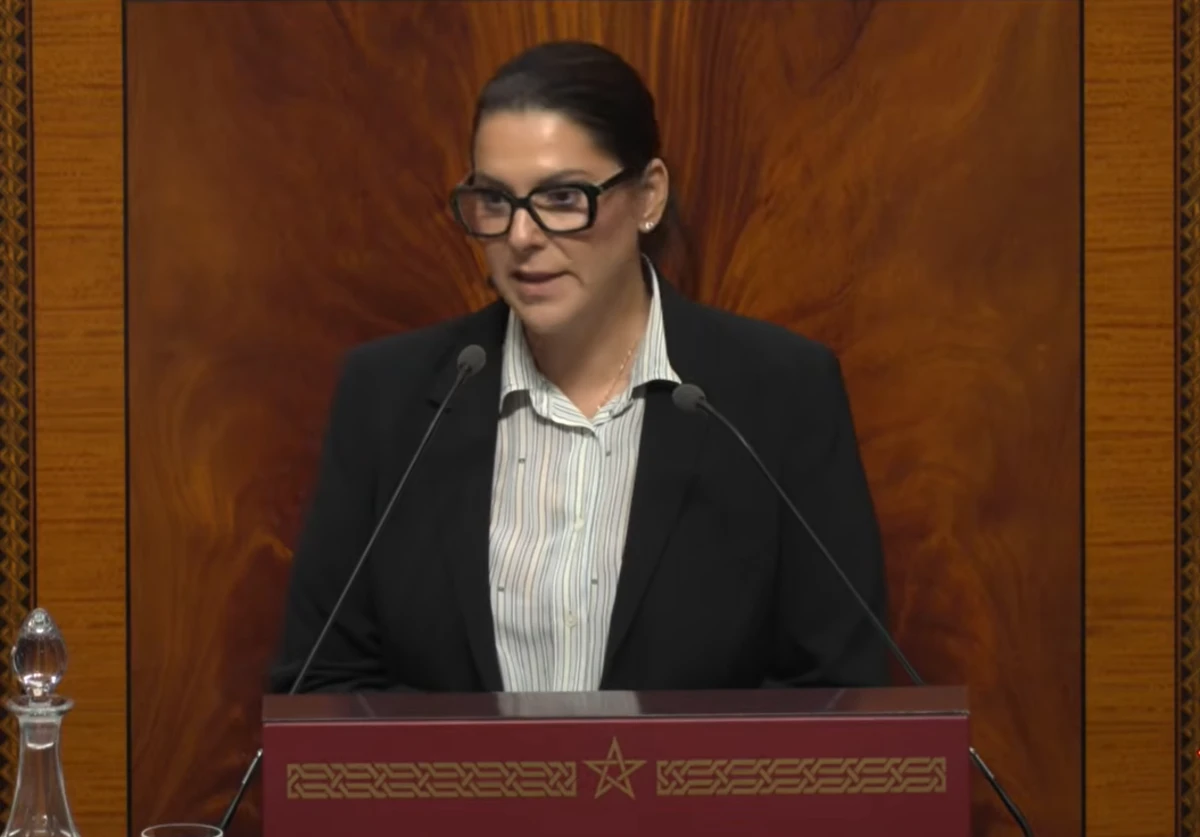
Rabat – It was supposed to be the moment Fatima Zahra Mansouri laid out her vision for Morocco’s next several years. Instead, her maiden policy address to Parliament on Monday became a lesson in how quickly a political moment can be overtaken by something far smaller than its substance.
The head of government stood before lawmakers to deliver her first general policy statement, a traditional set-piece in which an incoming prime minister commits to a legislative roadmap in exchange for parliamentary confidence. The speech covered the priorities her cabinet intends to pursue. What dominated the aftermath, however, was not any of that. It was the way she read it.
Clips circulating from the official session show Mansouri hesitating over certain words, stumbling through grammatical constructions, and visibly struggling at points to render the text smoothly in classical, or Modern Standard, Arabic — the register in which such formal addresses are customarily delivered. For a segment of the Moroccan public, and reportedly for some members of parliament seated in the chamber, the mismatch between the gravity of the occasion and the halting delivery was enough to turn a constitutional ritual into a social-media storm.
The reaction split quickly along familiar lines. Critics argued that fluent command of official Arabic should be a baseline expectation for anyone holding the country’s highest executive office, particularly when the occasion involves entering into a formal political commitment with the legislature and with the public at large. Others pushed back, insisting that the public conversation should center on the substance of the program — its budget commitments, its reform timelines, its measurable targets — rather than on a few seconds of imperfect delivery.
Lost in the noise, to some extent, is the weight of what the program itself is meant to address. Mansouri’s government is stepping into office at a moment when Moroccans are looking for concrete answers on economic pressure, employment, and access to public services, and her cabinet will ultimately be measured against those commitments rather than against her command of classical grammar. Still, the episode is a reminder of how easily a stylistic stumble can eclipse a substantive policy debut in an age when a few seconds of video travel faster than any government statement.

