
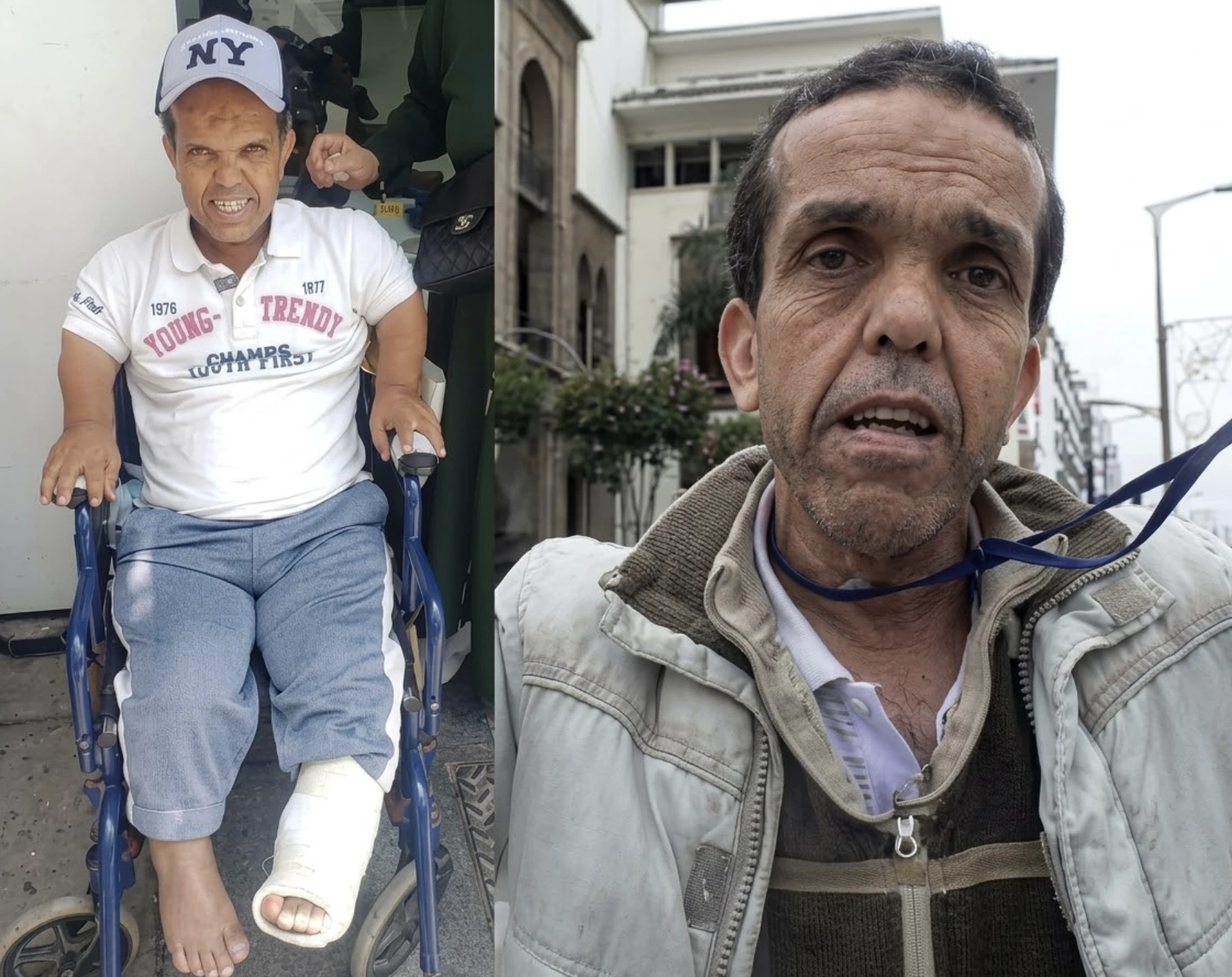
In Morocco, a single social media post can sometimes change the course of a forgotten life within hours. That is precisely what happened to veteran actor Jilali Bouskha, a familiar face from Moroccan television and cinema, after comedian Mustapha Nasri went public on Sunday with details of the artist’s struggle.
Nearly a year ago, Bouskha was struck by a car, a Dacia, in an accident that left him with leg injuries severe enough to hamper even his most basic movements. According to Nasri’s account, the actor never received compensation for the damages he suffered, a gap that has pushed his household into a quiet form of hardship rarely discussed in public.
Today, it is his sister who shoulders most of the daily burden, overseeing his care, covering part of his medical costs, and stretching already limited family resources to their breaking point. It is a far cry from the sets and stages where Bouskha once entertained Moroccan audiences for years.
In his appeal, Nasri called directly on the relevant authorities, particularly those overseeing the arts and culture sector, to step in and address the artist’s situation before it worsens further. The response was immediate: within six hours of being posted, the appeal had already drawn more than 77,000 views, a number that keeps climbing as the post continues to circulate.
Several prominent figures from Morocco’s entertainment industry have since voiced their support, with a number of them offering concrete assistance to Bouskha and his family. The wave of grassroots solidarity highlights a recurring issue: many Moroccan artists who once shaped the country’s cultural landscape find themselves, once the spotlight fades, without adequate social protection or a safety net strong enough to absorb life’s accidents.
Bouskha’s story has reignited a broader conversation about precarious working conditions among cultural professionals, especially those without stable contracts who are left exposed the moment misfortune strikes. For now, while any institutional response remains uncertain, it is the informal chain of public solidarity, amplified across social media, that continues to carry hope for the actor and his family.