
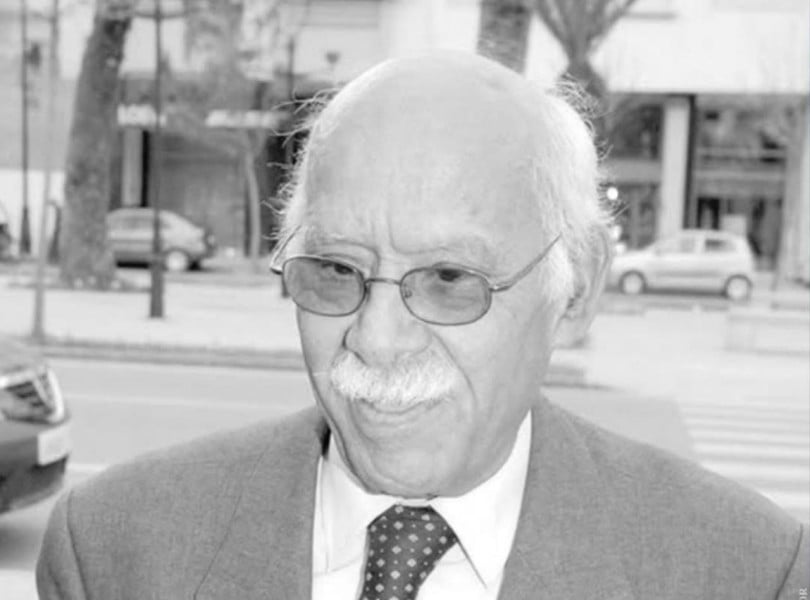
Morocco’s literary world is mourning one of its most towering figures. Mohamed Sergheini, poet, novelist and literary critic, died on Friday at the age of 96 after a long illness, closing a chapter that stretched across more than half a century of Arabic letters.
Born in Fez in 1930, Sergheini belonged to the generation of Moroccan intellectuals who shaped the country’s post-independence literary thought, opening it up to both the wider Arab world and modern academia. He joined the Faculty of Arts and Humanities in Fez as a professor in the early 1960s and served as vice-dean from 1986 to 1991, mentoring generations of scholars and researchers.
His body of work was as wide-ranging as it was demanding: poetry collections, critical studies, translations, semiotic research, novels and plays. That output earned him recognition well beyond Morocco’s borders. In 2013, his poetry collection Under the Rubble, Above the Rubble won Morocco’s national book prize for poetry. A decade earlier, in 2004, he had already received the International Argana Prize for Poetry, a career-defining honor for a body of work marked by rare formal rigor.
Beyond his own writing, Sergheini acted as a bridge between traditions. Through his work in semiotics and translation, he helped circulate ideas between Arabic and Western literary currents at a time when such exchanges were still rare within Moroccan academia. Colleagues remembered him as a rigorous mind who held himself to the same exacting standards he expected of his students, yet remained generous with his time and knowledge.
News of his death drew an outpouring of tributes across Moroccan and wider Arab cultural circles, where Sergheini was regarded as one of the emblematic figures of the contemporary poetic and intellectual movement. Further homages are expected in the coming days, both in the cultural press and among the academic circles he shaped for decades.
His passing marks the loss of a living link to twentieth-century Moroccan literary memory. Yet the body of work he leaves behind, vast, varied and still largely underexplored by international readers, will continue to be read, taught and debated for generations to come.

