
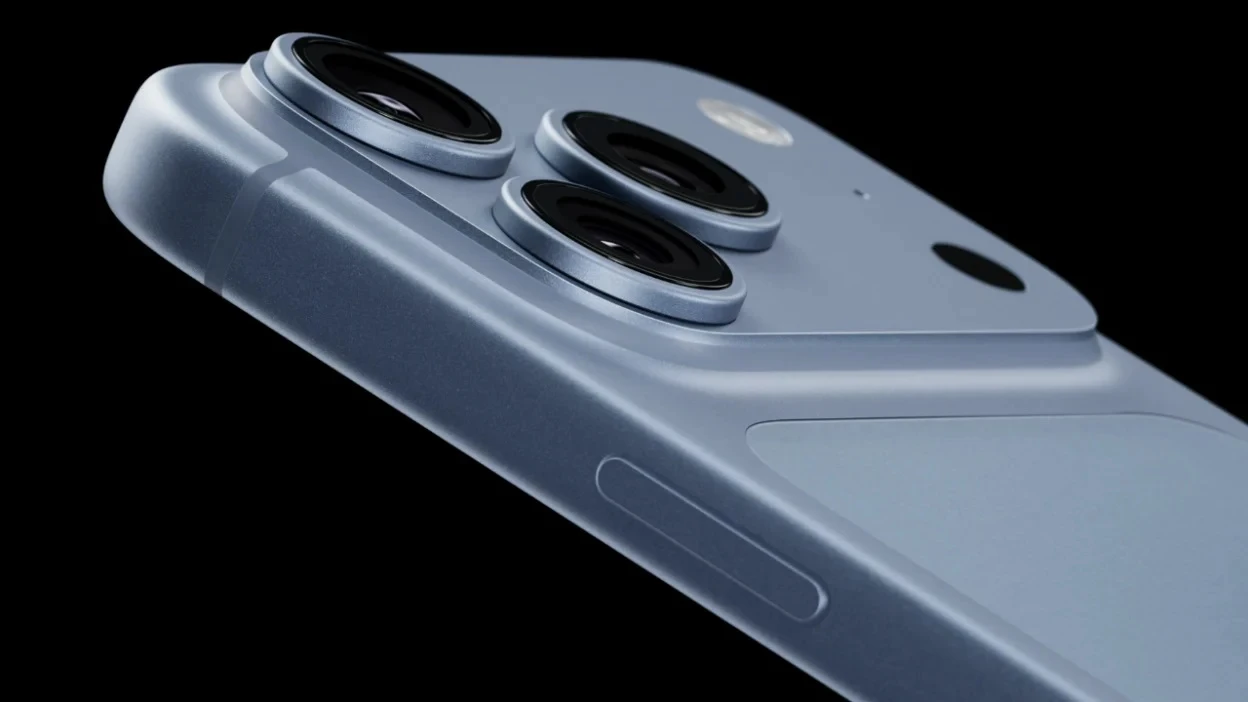
Apple has officially unveiled its new iPhone 18 Pro and iPhone 18 Pro Max, marking another step in the smartphone industry’s race toward on-device artificial intelligence. At its annual product event, the Cupertino-based company focused on three pillars: raw processing power, battery efficiency, and deeper on-device AI capabilities, at a time when competition among manufacturers increasingly hinges on software as much as hardware.
At the heart of both new models sits the A20 Pro chip, engineered to deliver meaningful performance gains while cutting power consumption — a balance users have been asking for over several generations. Apple says the new architecture allows AI models to run directly on the device rather than relying constantly on cloud processing, a decision that also addresses growing concerns over data privacy.
On the design front, both phones combine glass and aluminum in four finishes: deep black, silver, Glacier blue and Burgundy. It’s a more restrained aesthetic compared with earlier generations, reflecting Apple’s emphasis on material durability over flashy color options.
The most notable overhaul in this cycle belongs to Siri. The voice assistant now features more natural-sounding voices, significantly improved dictation, and tighter integration with third-party apps — an upgrade many had been waiting for since Apple first outlined its Apple Intelligence ambitions. The changes are widely seen as an attempt to close the gap between Siri and rival assistants built around generative AI.
On pricing, the iPhone 18 Pro starts at 1,199 dollars, while the Pro Max begins at 1,299 dollars. Pre-orders open Saturday, with the first units shipping September 18. That tight rollout window, typical of Apple’s launch playbook, is expected to trigger heavy demand both online and at retail stores the moment reservations go live.
Beyond the spec sheet, the announcement underscores Apple’s broader strategy: turning the iPhone into a personal AI platform capable of handling complex tasks without a constant connection to remote servers. Whether consumers, facing ever-climbing prices, will embrace this shift with the same enthusiasm as previous launches remains an open question.

