
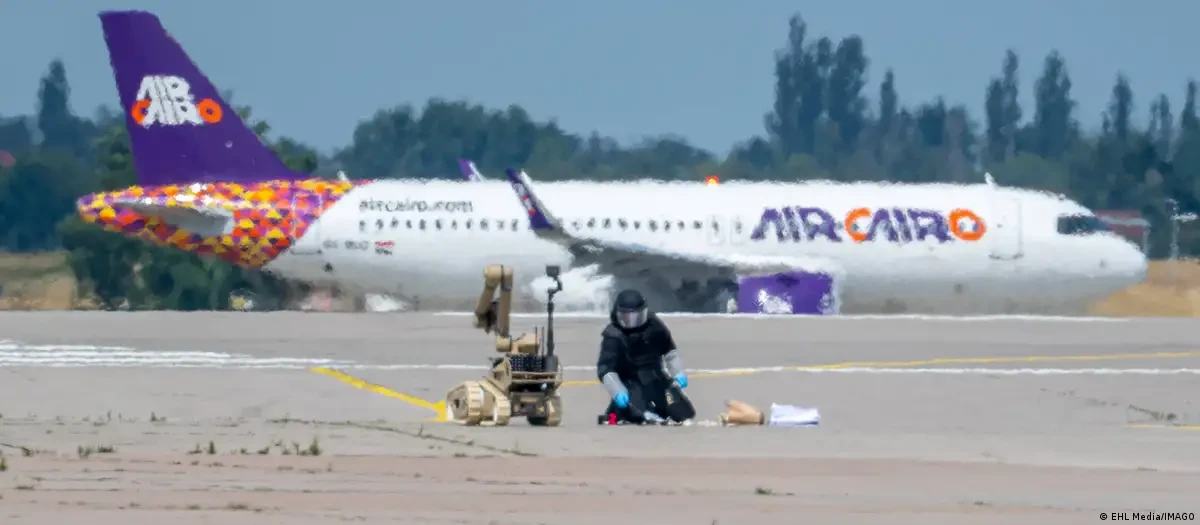
Germany has taken a decisive step this week, formally pointing the finger at Russia for the failed drone attack that targeted Leipzig-Halle Airport in early August. More than a month after the incident, Berlin says it now has sufficient evidence to establish Russian responsibility for what officials describe as a hybrid warfare operation.
Interior Minister Alexander Dobrindt and Foreign Minister Johann Wadephul publicly named Russia in early September, an unusually blunt accusation from a government that has traditionally been cautious in assigning blame to Moscow. Chancellor Friedrich Merz vowed that « the federal government will make the perpetrators of these hybrid attacks pay a heavy price, » signaling a marked shift in Berlin’s posture toward the Kremlin.
German investigators say they recovered weapons and detonation devices whose technical signatures match those found in earlier operations attributed to Russian services elsewhere in Europe. That forensic overlap reportedly played a decisive role in pushing Berlin past the diplomatic caution it had maintained until now.
In response, Germany has shut down the Russian House cultural center in Berlin and a Russian consulate in Bonn, both long suspected of serving as fronts for influence operations. Authorities have also tightened visa rules for Russian nationals and pledged to push for tougher European Union sanctions against Moscow.
Berlin is additionally planning to step up military support for Ukraine, with deliveries of attack drones and air-defense systems expected as early as this month. The government also wants to expand the powers of its intelligence services, which would be authorized to conduct cyber operations, disrupt suspicious supply chains, and infiltrate networks linked to weapons production.
The episode fits into a broader pattern of suspected Russian hybrid actions across Europe in recent months, ranging from sabotage and cyberattacks to unexplained drone overflights near sensitive infrastructure. Security analysts see the Leipzig-Halle case as another marker of rising tension between Moscow and Western capitals, as the war in Ukraine continues to strain the continent’s wider security architecture.

